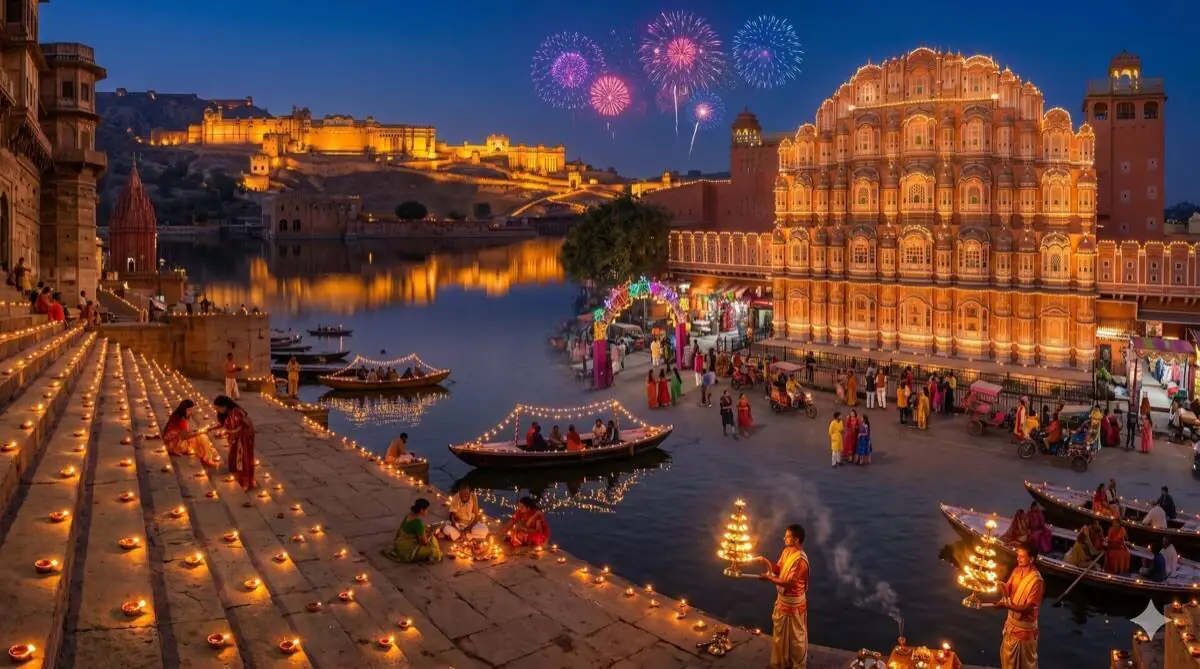
Diwali is the festival most people picture when they picture India — but the postcard image of a single night of lamps and fireworks undersells what actually happens. Diwali is five days long, each with its own ritual, and the way it's celebrated changes noticeably as you cross the country. This guide covers the 2026 dates, what each day means, and where to actually go if you want to experience it rather than just read about it.
The short answer
Diwali 2026 falls on: Sunday, 8 November (Lakshmi Puja, the main day).
The full festival runs: roughly 6–10 November — Dhanteras through Bhai Dooj.
Best city for the spectacle: Jaipur — the Old City bazaars are illuminated end to end.
Best city for devotion: Varanasi or Ayodhya — riverside lamps and a more sacred atmosphere.
Book ahead: domestic flights and trains fill up fast as families travel home for the festival.
Diwali in Amritsar: Sikhs mark the same nights as Bandi Chhor Divas and the whole complex is lit. Our Golden Temple guide covers the four doors, the langar and the daily ceremonies.
What Diwali Actually Celebrates
At its core, Diwali — "Deepavali," a row of lights — marks the triumph of light over darkness and good over evil. The most widespread story, especially across North India, is Lord Rama's return to Ayodhya after fourteen years of exile and his victory over the demon king Ravana; the citizens of Ayodhya are said to have lit rows of oil lamps to welcome him home, which is where the festival's defining image comes from.
That's not the only story attached to the festival, and which one matters most depends on where you are. In Bengal, the same nights are given over to Kali Puja instead. In Gujarat and much of Western India, Diwali marks the start of the business new year — merchants open fresh account books and have them blessed. In the South, more weight falls on the day before the main event, commemorating Krishna's victory over the demon Narakasura. Diwali is really several overlapping festivals sharing a calendar window, and travelling through more than one region during the season shows you how differently the same five days can feel.
The Five Days of Diwali
Day 1 — Dhanteras
Dhanteras opens the festival with prayers to Lord Dhanvantari, the god of health and medicine, and a widespread custom of buying gold, silver or new utensils for the home — an act believed to invite prosperity for the year ahead. Homes get a thorough cleaning in the days before, said to clear negative energy and make room for good fortune, and the first diya of the festival is lit this evening.
Day 2 — Naraka Chaturdashi (Choti Diwali)
The second day marks Krishna's victory over the demon Narakasura — a story of light overcoming a very literal darkness. In South Indian and Maharashtrian homes especially, this is the day for an abhyanga snan: waking before sunrise for a sesame-oil massage followed by a ritual bath, treated by many families as the more meaningful of the festival's two big mornings.

Day 3 — Lakshmi Puja (Main Diwali)
This is the night most people mean when they say "Diwali." Homes are decorated with diyas, candles and rangoli (intricate floor patterns made from coloured powder or flower petals), and families perform Lakshmi Puja — worship of the goddess of wealth and prosperity, usually alongside Ganesha, remover of obstacles — in the hope of a prosperous year ahead. Fireworks follow after dark, and in cities across the country the sky and the streets light up more or less simultaneously.
Day 4 — Govardhan Puja
The fourth day honours the story of Krishna lifting the Govardhan hill on one finger to shelter his devotees from torrential rain sent by an offended Indra. Families build small replica hills — often from food or, traditionally, cow dung — and offer prayers to the earth. This day is more prominent in North India than elsewhere, and less visible to visiting travellers than the days around it.
Day 5 — Bhai Dooj
The festival closes with Bhai Dooj, a celebration of the bond between brothers and sisters. Sisters apply a tilak to their brothers' foreheads and pray for their long life; brothers give gifts in return. It's a quieter, family-centred close to a loud few days, and a reminder that Diwali is, underneath the fireworks, a festival about home.
| Date (2026) | Day | What happens |
|---|---|---|
| 6 November | Dhanteras | Buying gold, cleaning homes, first diya lit |
| 7 November | Naraka Chaturdashi | Pre-dawn oil bath (South India especially) |
| 8 November | Lakshmi Puja | Main day — diyas, rangoli, fireworks |
| 9 November | Govardhan Puja | Honouring Krishna and the earth |
| 10 November | Bhai Dooj | Brothers and sisters, festival close |
Where to Experience It
Jaipur: the Pink City takes Diwali further than almost anywhere else — the Old City's bazaars around Johari Bazaar and Bapu Bazaar are strung with lights for weeks either side of the festival, and the illuminated City Palace is a genuine spectacle after dark.
Varanasi: while Varanasi's biggest lamp festival is technically Dev Deepavali (fifteen days later), the city during Diwali itself is still extraordinary — ghats lit with diyas, evening Ganga Aarti at its most crowded and atmospheric.
Amritsar: the Golden Temple is lit with thousands of lamps and fireworks reflected in the sacred pool that surrounds it — one of the most photographed Diwali scenes in the country, and historically linked to Bandi Chhor Divas, the Sikh festival marking Guru Hargobind Ji's release from imprisonment, which falls on the same night.
Ayodhya: as the setting of the Rama story that anchors the whole festival, Ayodhya has in recent years staged some of the largest diya-lighting displays in the country along the Saryu river.
Diwali isn't one festival wearing one face across the country — it's five days and at least four different stories, and the version you see depends entirely on where you stand when the lamps are lit.
A Few Practical Notes
Book ahead: Diwali is India's biggest domestic travel weekend — families return home from across the country, so flights and trains fill up well in advance and fares climb accordingly.
Expect fireworks and noise: firecrackers are widespread in the days around the main festival, particularly in North Indian cities, and air quality can dip noticeably for a few days afterward.
Some businesses close: smaller shops and offices often close for a day or two around Lakshmi Puja itself, though hotels, restaurants aimed at travellers, and major attractions stay open.
Dress and etiquette: if you're invited into a home celebration, modest dress is appreciated, and it's common practice to remove shoes before entering.
Frequently Asked Questions
When is Diwali in 2026?
Diwali 2026 falls on Sunday, 8 November. The full five-day festival runs from Dhanteras on 6 November through Bhai Dooj on 10 November, with Lakshmi Puja — the main day of lights — on 8 November.
What are the five days of Diwali?
Dhanteras (buying gold and cleaning homes), Naraka Chaturdashi or Choti Diwali (an early oil bath, especially in South India), Lakshmi Puja (the main day — diyas, fireworks, worship of the goddess of wealth), Govardhan Puja (honouring Krishna and the earth), and Bhai Dooj (celebrating the bond between brothers and sisters).
Where is the best place to see Diwali in India?
Jaipur's Old City bazaars are illuminated end to end and widely considered India's most spectacular Diwali street display. Varanasi and Ayodhya offer a more devotional, riverside-lamp experience; Amritsar's Golden Temple is lit with thousands of lamps and fireworks reflected in the sacred pool.
Is Diwali celebrated differently across India?
Yes. North India centres the story on Lord Rama's return to Ayodhya after 14 years of exile. South India places more weight on Naraka Chaturdashi, the day before, marked by a pre-dawn oil bath. West India (especially Gujarat) treats Diwali as the start of the business new year, with new account books opened and blessed.
Is it safe to travel in India during Diwali?
Yes, with a few practical notes: fireworks are widespread in the days around Diwali, so expect noise and some air-quality dips in major cities; trains and flights get busy as families travel home, so book well ahead; and many businesses close for a day or two around the main festival date.